The Exit Tax: What Enterprises Really Pay When They Try to Walk Away from Dell

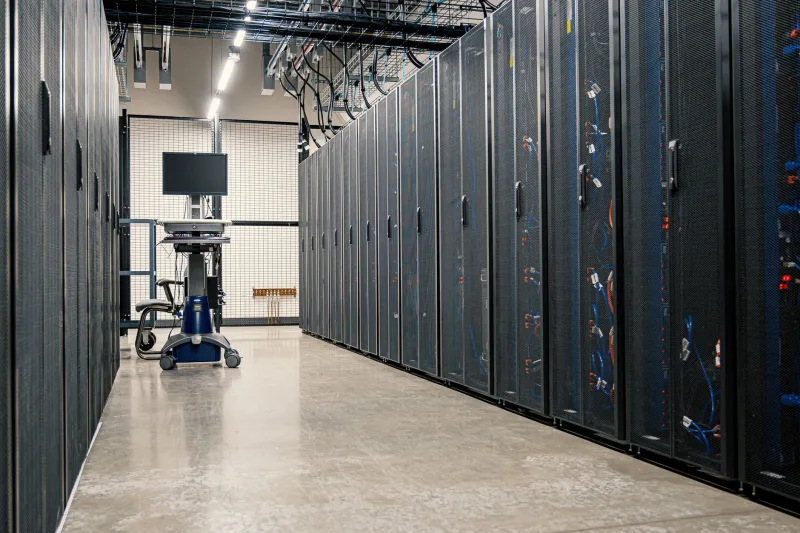
Photo: Barry Moore, Public domain, via Wikimedia Commons
On paper, the case for switching hardware vendors can look compelling. A competing manufacturer offers newer processors at a lower per-unit cost. The spec sheets favor the challenger. Procurement teams run preliminary comparisons, and the numbers seem to point toward change. Then the migration actually begins—and the math starts to unravel.
For enterprises that have built their operations around Dell infrastructure, the hidden costs of departure have a way of surfacing slowly, then all at once. Understanding why requires looking beyond purchase prices and into the deeper architecture of how Dell products integrate into organizational life.
The Management Layer Nobody Factors In
Dell's OpenManage suite, along with tools like iDRAC and Dell Command | Monitor, has become the operational backbone for thousands of IT departments across the United States. These platforms offer centralized fleet visibility, automated patch management, and remote diagnostics that teams have spent years configuring and refining. The institutional knowledge embedded in those configurations rarely shows up on any balance sheet.
When an organization decides to migrate to a different hardware vendor, it is not simply swapping one machine for another. It is dismantling a management infrastructure that may govern thousands of endpoints and rebuilding it from scratch on a new platform. The retraining hours, the consultant fees, the inevitable productivity dip during the transition—none of these appear in the initial vendor comparison.
A mid-sized financial services firm based in the Midwest, which asked not to be named, attempted a phased migration away from Dell workstations in 2022. After piloting the new hardware with a 200-person department, the IT director estimated that replicating their existing management workflows on the competing platform required approximately 14 months of configuration work and an unplanned $340,000 in consulting expenditures. The migration was quietly halted.
Driver Ecosystems and the Compatibility Debt
Driver compatibility is among the least glamorous topics in enterprise IT, and that obscurity is precisely what makes it dangerous. Dell's driver ecosystem, particularly across its Latitude and Precision lines, has been engineered with enterprise stability as a stated priority. Certified driver packages, tested against specific Windows and Linux builds, provide a predictability that IT teams depend on.
Switching vendors introduces what some IT professionals have begun calling compatibility debt—the accumulated risk of running hardware from a manufacturer whose driver cadence, certification testing, and enterprise support infrastructure operates differently. For organizations running specialized peripherals, proprietary internal applications, or legacy software with narrow hardware tolerances, this debt can be substantial.
One Texas-based engineering consultancy that evaluated a hardware switch in 2023 found that three of its core CAD applications required driver certification testing that added six weeks to the pilot timeline and required direct engagement with two separate software vendors. The time cost alone was enough to push the projected ROI of the migration past the four-year mark—at which point the competing hardware's cost advantage had largely evaporated.
Organizational Inertia Is Not Irrational
It is tempting to characterize organizational resistance to hardware migration as mere inertia—the bureaucratic tendency to stay the course. But in many cases, that resistance reflects a rational calculation that leadership has not fully articulated.
Help desk teams have learned Dell hardware. Technicians know where the service tags are, how to navigate BIOS menus, which failure modes are common on which product lines, and how to navigate Dell's ProSupport infrastructure when escalation is necessary. That knowledge has real economic value. Replacing it requires training investment and, more significantly, the absorption of a learning curve that will produce elevated support ticket volumes and slower resolution times during the transition period.
For large enterprises, even a temporary increase in average ticket resolution time represents a measurable productivity cost. When distributed across thousands of users over a multi-month transition window, the aggregate impact can be significant.
When the Competing Specs Don't Translate
Another dimension of switching cost that rarely receives adequate attention is workflow optimization. Over years of deployment, enterprises often tune their Dell hardware configurations—thermal profiles, power management settings, memory configurations—to the specific demands of their workloads. This tuning is invisible to anyone outside the IT department, but it contributes meaningfully to the performance employees actually experience.
Migrating to new hardware means starting that optimization process from zero. The new machines may carry better specifications on paper, but until they have been configured and tested against actual production workloads, those specifications remain theoretical. The performance gap between a well-tuned incumbent system and a newly deployed alternative can persist for months.
This dynamic is particularly pronounced in creative and engineering environments, where rendering pipelines, simulation workloads, and video editing workflows have often been calibrated over years. Studios and engineering firms that have invested in that calibration are, in effect, paying a second time when they migrate—once for the new hardware, and once for the labor required to rebuild institutional performance knowledge.
The Procurement Relationship Has Value Too
Enterprises that have maintained long-term relationships with Dell frequently benefit from negotiated pricing structures, dedicated account management, and priority support access that are not available to new customers. These benefits are rarely documented formally, but they represent real economic value that disappears the moment an organization signals its intent to migrate.
Procurement teams that have built multi-year purchasing histories with Dell may find that the discounts they have come to treat as standard are, in fact, relationship-dependent. Rebuilding an equivalent relationship with a new vendor takes time—and during that period, the cost-per-unit advantage that originally motivated the switch may be partially or fully offset by the loss of negotiated pricing.
The Honest Calculation
None of this is an argument that migration is never the right decision. There are genuine scenarios in which switching vendors makes financial and operational sense—particularly when an organization's requirements have shifted dramatically, or when a competing platform offers capabilities that Dell's lineup cannot match.
But the organizations that navigate these decisions most effectively are those that account for the full scope of switching costs before committing to a direction. The hardware price comparison is the beginning of the analysis, not the end. Management platform migration, driver compatibility debt, organizational retraining, workflow re-optimization, and relationship rebuilding all carry costs that must be quantified honestly.
For many enterprises, running that complete calculation has produced a surprising conclusion: staying with Dell, even when a competing product appears superior on a spec sheet, is the more economically rational choice. Not because Dell's hardware is necessarily the best available, but because the infrastructure built around it has accumulated a value that no single product comparison can fully capture.
The exit tax is real. The organizations that understand it before they start packing are the ones that make the most informed decisions—regardless of which direction they ultimately choose.