The Gravity of Dell: Why Organizations Discover Too Late How Hard It Is to Leave

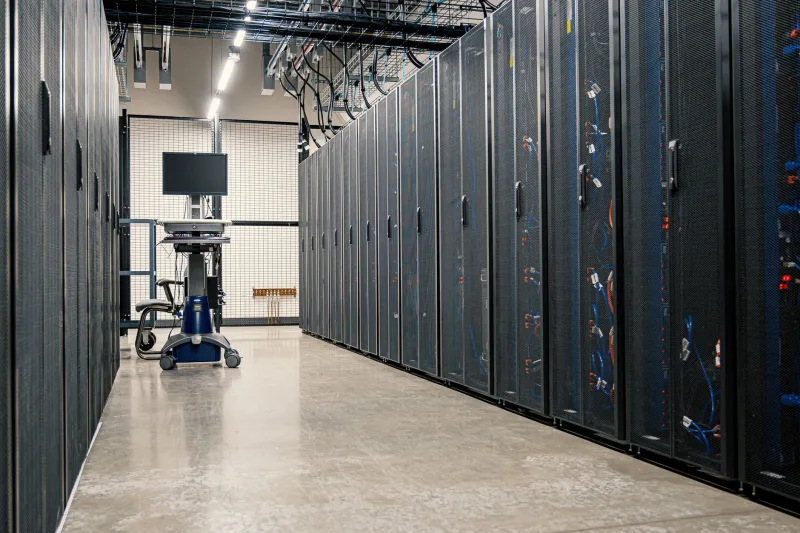
Photo by Photo by Winston Chen on Unsplash on Unsplash
On the surface, the decision to migrate away from Dell hardware seems like a straightforward procurement exercise. A competing vendor offers better pricing, a more attractive warranty structure, or a compelling spec sheet. Leadership signs off. IT begins the transition. And then, somewhere around week three, the project manager updates the timeline for the first time.
For dozens of enterprise IT teams across the United States, that first timeline update is rarely the last. What begins as a hardware swap gradually reveals itself as something far more complicated — a reckoning with years of accumulated dependencies, proprietary tooling, and organizational muscle memory that no purchase order fully accounts for.
This is the quiet reality of Dell ecosystem lock-in: not a single dramatic barrier, but a gravitational field composed of dozens of small forces pulling in the same direction.
The Management Layer Nobody Budgets For
Dell's OpenManage suite — including OpenManage Enterprise, iDRAC, and its associated plugins — is widely regarded as one of the more capable infrastructure management platforms in the enterprise space. IT teams rely on it for firmware updates, health monitoring, alerting, and remote access. Over time, those capabilities become deeply embedded in operational workflows.
When organizations attempt to migrate to competing hardware, they often discover that their internal tooling, scripts, and monitoring dashboards have been built around OpenManage's specific API structure. Replicating that functionality in a competitor's ecosystem is not simply a matter of installing new software. It requires rebuilding integrations, retraining staff, and absorbing a productivity gap that can stretch from weeks into months.
One IT director at a mid-sized logistics company in the Midwest, who requested anonymity due to ongoing vendor negotiations, described the experience candidly. "We had automated about sixty percent of our routine maintenance tasks through OpenManage integrations. When we tried to replicate that on the new platform, we realized our team had essentially written their institutional knowledge into Dell's tooling. Extracting it took longer than anyone expected."
Driver Ecosystems and the Compatibility Assumption
Beyond management software, Dell's driver ecosystem introduces a second layer of friction that organizations frequently underestimate. Dell Command | Update, which automates driver and BIOS management across fleets of client devices, creates a standardized patching environment that IT teams come to depend on for compliance and security workflows.
Migrating to a competitor's hardware means adopting a different driver management philosophy — one that may not integrate cleanly with existing endpoint management platforms, particularly in environments running Microsoft Endpoint Configuration Manager or similar tools. The time required to rebuild those patch management workflows, test compatibility across device configurations, and validate compliance reporting is rarely captured in initial migration cost estimates.
Enterprise environments running large fleets of Dell Latitude or Precision devices frequently discover that their imaging processes, zero-touch deployment configurations, and hardware-specific Group Policy settings are more Dell-specific than they realized. Each assumption that seemed universal turns out to be quietly vendor-specific.
The Support Contract Entanglement
ProCare and ProSupport contracts add another dimension to the departure calculus. Many organizations have structured their internal SLA commitments around Dell's next-business-day on-site service guarantees. When those contracts expire or when hardware is replaced, the support architecture that IT teams have communicated to their internal stakeholders — and occasionally to external auditors and compliance reviewers — must be rebuilt from scratch.
For organizations in regulated industries such as healthcare, financial services, or federal contracting, this is not a minor administrative task. It may require updated documentation, revised business continuity plans, and formal approval processes that extend the effective migration timeline considerably beyond what the hardware transition itself demands.
A senior infrastructure architect at a regional healthcare network in the Southeast described the support transition as the most underestimated component of their planned migration. "We had built our disaster recovery documentation around specific Dell response time guarantees. Switching vendors meant rewriting those documents, getting them re-approved, and in some cases going back to our compliance team. That added four months to a project we thought would take two."
Software Bundles and the Sunk Cost of Familiarity
Dell's consumer and prosumer lines introduce a different but equally persistent form of lock-in: bundled software ecosystems that users and small IT teams come to rely on without fully recognizing their vendor specificity. Dell Cinema, Dell Mobile Connect, and the broader suite of Dell-branded applications embedded in consumer Inspiron and XPS devices create user habits that do not transfer cleanly to competing hardware.
For small businesses and prosumer users, this familiarity is not trivial. The cognitive cost of relearning workflows, reconfiguring preferences, and accepting the absence of features that felt standard is a genuine switching cost — one that rarely appears in vendor comparison spreadsheets but consistently appears in user satisfaction surveys conducted after migrations.
The Institutional Knowledge Problem
Perhaps the most durable form of Dell lock-in is the one least discussed in procurement circles: the accumulated expertise that enterprise IT teams develop over years of working within a single vendor's ecosystem. Technicians who know exactly where Dell's BIOS settings diverge from industry defaults, administrators who have memorized the quirks of iDRAC firmware versions, and help desk staff who can diagnose Dell-specific failure modes without consulting documentation — all of this represents institutional capital that has no direct equivalent on a competing platform.
When organizations migrate, they do not simply replace hardware. They implicitly accept a temporary competency gap that affects response times, error rates, and the confidence with which IT staff approach unfamiliar problems. In high-availability environments, that gap has a measurable cost.
What Migration Timelines Actually Look Like
Organizations that have completed full migrations away from Dell-centric environments consistently report that actual timelines ran between 40 and 70 percent longer than initial project plans projected. The causes are rarely dramatic. They are, instead, cumulative: an unexpected API incompatibility here, a compliance documentation revision there, a help desk retraining program that took longer than anticipated, and a wave of user complaints about missing software features that required individual resolution.
None of these friction points is insurmountable. Organizations do successfully migrate away from Dell infrastructure, and some report satisfaction with the outcome. But the honest accounting of what that transition costs — in staff hours, productivity drag, and delayed timelines — is rarely part of the conversation when the initial decision to switch is made.
A Balanced Reckoning
None of this is to suggest that Dell's ecosystem is deliberately engineered to punish departing customers. Many of the lock-in effects described here are natural consequences of building a coherent, deeply integrated technology platform — the same integration that makes Dell's tools genuinely useful also makes them genuinely difficult to leave behind.
But for IT leaders evaluating vendor decisions, the lesson is worth internalizing: the cost of switching is not the cost of the new hardware. It is the full cost of everything that was quietly built around the old hardware over years of daily operation. That figure deserves a line item of its own in every migration budget — and honest attention long before the purchase order is signed.