What the Closets Are Hiding: The Reckoning That Comes When IT Finally Counts Every Dell Device

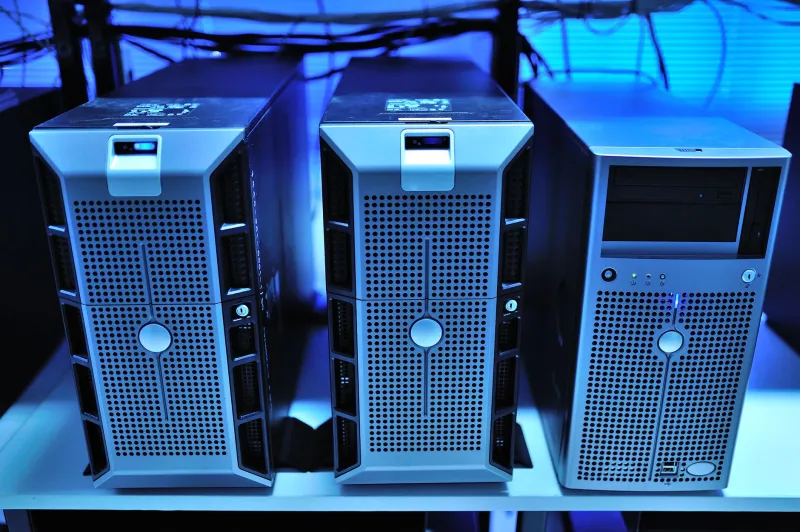
Photo: Velitch, CC0, via Wikimedia Commons
It usually starts with a budget conversation. A CFO asks why IT spending keeps climbing despite headcount staying flat. Or a new director walks in on their first week and requests a simple asset list — only to discover that no reliable one exists. Whatever the trigger, the moment an organization commits to a genuine, end-to-end audit of its Dell fleet, the results tend to produce a particular kind of institutional discomfort.
Not because the hardware has failed. More often, because it hasn't.
The Inventory That Nobody Wanted to Run
IT auditors who specialize in enterprise hardware assessments describe a pattern that repeats across industries and company sizes. Organizations accumulate Dell devices over years — sometimes decades — through purchasing cycles that were never fully reconciled with disposal records. Laptops get reassigned informally. Desktops migrate between departments without a ticket. Machines pulled from service during a remote-work transition get boxed and shelved, with every intention of processing them later.
Later, it turns out, can stretch into years.
One operations manager at a regional healthcare network in the Midwest described opening a storage closet during a facility consolidation and finding 34 Dell Latitude laptops still in their original shipping boxes. The machines had been ordered as emergency spares during a supply chain disruption in 2021, never deployed, and subsequently forgotten as the department reorganized. Each unit had an active ProSupport contract. The combined carrying cost, once calculated, exceeded the purchase price of several newer devices the same department had requisitioned that same quarter.
This is not an isolated incident. It is, according to multiple IT asset management professionals interviewed for this piece, closer to the norm than anyone in procurement would like to admit.
What the Spreadsheet Footnotes Actually Contain
The challenge with fleet audits is not purely logistical. It is also architectural. Most large organizations track Dell assets across multiple systems — a procurement database here, a help desk ticketing platform there, a department-managed spreadsheet that someone's predecessor built in 2017 and nobody has fully trusted since. When these sources are reconciled for the first time, the discrepancies are often startling.
License redundancy is one of the most consistent findings. Organizations running Dell hardware at scale frequently discover software subscriptions tied to devices that have been decommissioned, reassigned, or physically lost. Dell's integrated management ecosystem — while genuinely useful for active deployments — creates persistent license relationships that outlast the hardware they were meant to support. Without a disciplined offboarding process, those costs simply continue.
A senior IT director at a professional services firm based in Atlanta described the experience of auditing 400 Dell workstations across four office locations. The team found 61 machines that had not logged a user session in over 14 months. Of those, 23 were still drawing power in active workspaces, effectively functioning as very expensive space heaters. Eleven were found in various states of disassembly in a back office, cannibalized for parts but never formally retired. The remaining 27 were unaccounted for entirely.
"We had been renewing endpoint security licenses for every device on our original procurement list," the director said. "We had no process for removing machines that were no longer in service. That alone was a five-figure annual expense we were absorbing for absolutely nothing."
The Total Cost of Ownership Nobody Calculated
Dell hardware has a well-documented reputation for durability. Precision workstations and Latitude laptops routinely operate well beyond their original depreciation windows, which creates a genuine asset management paradox. A machine that still runs is easy to justify keeping. A machine that still runs but hasn't been touched in 18 months is harder to categorize — and therefore easier to ignore.
This is where total cost of ownership calculations tend to break down in practice. Organizations model TCO at the point of purchase, factoring in warranty, expected refresh cycles, and projected productivity value. What they rarely model is the cost of administrative overhead on aging devices, the security exposure of machines running outdated firmware, or the opportunity cost of capital tied up in hardware that is neither being used nor being sold.
IT asset disposition specialists note that Dell's resale market remains relatively healthy compared to other enterprise hardware brands. Functional Latitude and Precision machines from the 2018–2021 era still command meaningful prices in the secondary market. Every month an organization delays processing its dormant inventory, that residual value declines. For organizations sitting on dozens of unprocessed units, the cumulative depreciation loss can represent a significant and entirely avoidable expense.
The Audit as a Mirror
Perhaps the most consistent observation from IT professionals who have conducted comprehensive fleet audits is what the process reveals about organizational culture, not just organizational assets.
Departments that resist audits — or delay them, or produce suspiciously incomplete asset lists — are often the same departments operating the oldest hardware, carrying the most redundant licenses, and making the most informal purchasing decisions outside of official procurement channels. The audit, in this sense, functions less as an accounting exercise and more as a diagnostic.
A technology director at a mid-sized logistics company in Texas described the political dimension of the process with notable candor. "Every department head knew we were doing it, and every one of them spent the two weeks before the audit date quietly moving equipment around," he said. "Not to hide anything, necessarily. More because they finally had a reason to look at what they had, and they were embarrassed by what they found."
The embarrassment, he noted, was productive. The audit surfaced enough underutilized hardware to delay a planned refresh cycle by nearly a year, redirecting that capital toward infrastructure projects that had been perpetually underfunded.
What Organizations Do Differently After
The organizations that emerge from a fleet audit with the clearest picture tend to share a few operational changes. They implement continuous asset tracking rather than periodic audits, integrating Dell's management tools with their broader ITAM platforms to maintain a live inventory. They establish formal decommissioning workflows with defined timelines — a machine that has not been accessed in 90 days triggers a review; at 180 days, it enters the disposition queue. And they assign ownership of the asset lifecycle to a specific role rather than distributing responsibility across departments where accountability tends to dissolve.
None of these are complicated changes. What they require, more than technical sophistication, is institutional willingness to look — and to keep looking, even when the results are inconvenient.
The closets, it turns out, are not the problem. The problem is the years of comfortable inattention that filled them.