Engineered to Endure, Pressured to Expire: The Uncomfortable Truth About Dell's Durability Dilemma
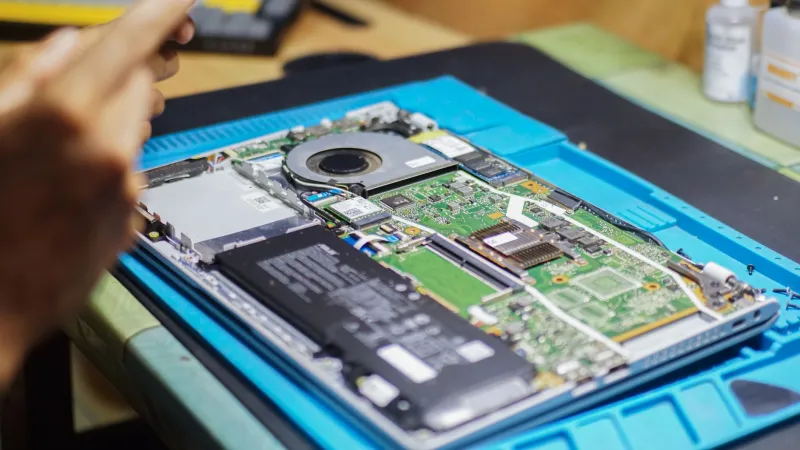
There is a quiet contradiction sitting at the heart of Dell Technologies' product strategy — one that the company rarely acknowledges publicly, and that its most loyal customers rarely stop to consider. Dell builds machines that last. Genuinely, measurably, frustratingly last. And in an industry structured around the economics of replacement, that is not entirely a compliment.
This is the Dell longevity paradox: the better the hardware, the longer customers hold onto it. The longer they hold on, the less frequently they buy. And the less frequently they buy, the harder it becomes to justify the engineering investment that made the machine worth keeping in the first place.
Understanding this tension requires looking at Dell not merely as a hardware manufacturer, but as a company navigating the increasingly complicated economics of the modern enterprise technology cycle.
What "Built to Last" Actually Costs
Dell's commercial and workstation lines — the Latitude, Precision, and OptiPlex families in particular — have long carried a reputation for structural integrity, thermal management, and component longevity that exceeds what many competitors offer at comparable price points. MIL-SPEC testing standards, reinforced chassis designs, and enterprise-grade component sourcing are not marketing language; they represent real engineering investments that carry real costs.
Those costs are absorbed upfront in the product's price tag. But they are also absorbed downstream in the form of extended useful life. A Dell Latitude 5000-series purchased in 2019 is, in many enterprise environments, still performing its primary function without meaningful degradation. That is not an accident — it is the direct result of deliberate design choices.
The problem, from a pure revenue perspective, is straightforward: a machine that functions well for six or seven years is a machine that is not being replaced at the three-year interval that most vendor sales forecasting models prefer.
Supply chain analysts who track the commercial PC market have noted for years that average device refresh cycles in large US enterprises have been quietly stretching. What was once a reliable three-to-four-year cycle has, particularly in the wake of the pandemic-era equipment surge, extended toward five years and beyond in many organizations. Dell's own hardware quality is, paradoxically, one of the contributing factors.
The Subscription Layer: A Partial Solution
Dell's strategic response to this tension has not been to engineer less durable products — doing so would erode the brand equity that differentiates it in a crowded market. Instead, the company has pursued an increasingly aggressive pivot toward services, software, and subscription-based offerings.
Dell APEX, the company's as-a-Service portfolio, represents the clearest articulation of this strategy. By wrapping hardware inside consumption-based financial models, Dell creates recurring revenue streams that are decoupled from the physical replacement cycle. Whether a customer holds their hardware for three years or six, Dell's financial relationship with that customer continues — and ideally deepens.
This is not a novel approach. It mirrors strategies deployed across the enterprise technology sector, from Microsoft's shift to Microsoft 365 to Cisco's push toward software licensing. But for a company whose identity has been so thoroughly anchored in the tangibility of physical hardware, the transition carries particular cultural and operational weight.
The question for enterprise buyers is whether the subscription layer genuinely adds value, or whether it functions primarily as a mechanism for extracting recurring revenue from hardware that would otherwise simply continue working without additional investment.
The Customer's Perspective: A Complicated Loyalty
For long-tenured Dell customers — particularly IT directors and procurement leads at mid-sized US businesses — the durability question sits at the center of every refresh conversation.
The calculus is rarely simple. A machine that continues to function is not necessarily a machine that continues to perform competitively. Software demands escalate. Security requirements evolve. Workforce expectations shift. A five-year-old Precision workstation may run reliably, but it may also bottleneck AI-assisted workflows, struggle with modern virtualization loads, or fall outside the vendor support window that compliance frameworks require.
This is where Dell's engineering reputation becomes a double-edged asset for customers. The hardware's durability encourages retention past the point of optimal performance, creating a gradual drag on productivity that is difficult to quantify until it becomes impossible to ignore. The machine works — it just does not work as well as it once did relative to what it is being asked to do.
Some IT professionals describe this dynamic as "comfortable inertia" — a state in which the absence of dramatic failure masks a slow erosion of competitive capability. Dell's reliability, in this framing, makes the case for refresh harder to make internally, even when the operational data would support it.
What Dell Engineers Are Actually Optimizing For
The engineering priorities embedded in Dell's commercial hardware design reflect a specific set of tradeoffs. Thermal efficiency, structural resilience, and serviceability — the ability to replace components in the field without depot-level intervention — have historically been weighted heavily in the design process.
That emphasis on serviceability is particularly significant. Dell's commercial and workstation lines have maintained a degree of repairability that is increasingly rare in the broader PC market, where competitors have moved aggressively toward soldered components and sealed chassis. This design philosophy extends device life but also supports a robust secondary market and internal repair economy that further reduces replacement frequency.
The tension, then, is not between engineering integrity and business interest in any simple sense. It is between two legitimate and competing business interests: the brand value generated by durable, repairable hardware, and the revenue model that benefits from more frequent customer engagement.
The Honest Recommendation for US Buyers
For enterprise procurement teams and individual professionals evaluating Dell hardware today, the durability paradox has a practical implication that is worth stating directly: you are likely to get more usable life from a Dell commercial device than the vendor's official support lifecycle suggests. That is a genuine advantage — one that competitors cannot consistently match.
The appropriate response, however, is not to simply hold hardware indefinitely. It is to build refresh strategies that account for performance trajectory rather than failure events. The question should not be "is this machine still working?" but rather "is this machine still working well enough for what we are asking it to do — and what will we be asking it to do in eighteen months?"
Dell's longevity, properly understood, is not an argument against upgrading. It is an argument for upgrading on your terms, with your timeline, rather than on the forced schedule that less reliable hardware would impose.
The paradox, ultimately, resolves in the customer's favor — provided they are paying attention.
Dell Experience covers enterprise and consumer computing with a focus on real-world performance, long-term value, and the decisions that matter to technology professionals across the United States.